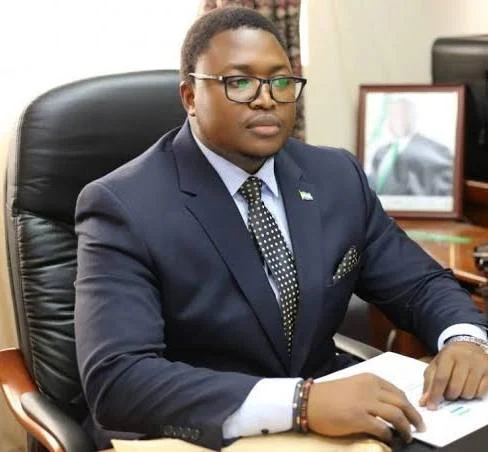
Sierra Leone’s Minister of Foreign Affairs and Chairman of the ECOWAS Council of Ministers, Mr. Timothy Kabba, has called on West African leaders to enforce a strict zero-tolerance policy against unconstitutional changes of government across the region.
Kabba made the remark at the opening ceremony of the 95th Ordinary Session of the ECOWAS Council of Ministers, which began on Wednesday, December 10 and runs through Friday, December 12 in Abuja.
He noted that the call became necessary due to recent military takeovers, humanitarian crises, and emergency declarations affecting several ECOWAS member states.
According to him, ECOWAS must remain united, vigilant, and firm in defending democratic governance.
> “We must uphold a zero-threat stance against unconstitutional changes of government. Our commitment should translate into timely reactions, measured responses, and stronger preventive mechanisms,” Kabba said.
He stressed that ECOWAS remains committed to constructive engagement with member states currently under transition governments, adding that the goal is not isolation, but to encourage a credible, inclusive, and time-bound return to democratic rule.
Kabba emphasized that the regional bloc will continue to speak with a unified voice guided by its protocols on democracy and good governance, ensuring the swift restoration of constitutional order wherever it is threatened.
He urged delegates attending the 95th Ordinary Session to approach their responsibilities with renewed commitment and cooperation, noting that the region’s peace, stability, and development depend on their decisions.
The minister also highlighted the growing security and governance challenges confronting West Africa, calling for collective determination to safeguard peace, protect democratic institutions, and ensure that citizens’ hopes for development are not undermined.
Kabba revealed that over the course of the meeting, the council would examine several memoranda and comprehensive reports aimed at evaluating the current state of the ECOWAS community and identifying priority areas for improvement.
In his goodwill message, President of the ECOWAS Commission, Dr. Omar Touray, urged ministers to thoroughly review key documents requiring their joint decisions. These include the annual work programme, institutional budgets, the community’s financial status, updates on the ECOWAS levy protocol, and reports from the Monitoring General and Audit Committee.
Touray also disclosed that the council will receive updates on the ECOWAS Trade Liberalisation Scheme (ETLS), the ECOWAS Single Currency project, and the financial situation of the West African Power Pool — the region’s electricity market platform currently facing financial challenges due to debts owed by national electricity companies.
He further announced the appointment of Alhaji Aliko Dangote as the Pioneer Chairperson of the ECOWAS Business Council, a role in which he is expected to use his vast business experience to promote intra-regional trade and investment.
In her welcome address, Nigeria’s Minister of State for Foreign Affairs, Ambassador Bianca Odumegwu-Ojukwu, urged the council to adopt decisions that will guide the recommendations to be presented to the Authority of Heads of State and Government.
She stressed the importance of defending constitutional order, promoting inclusive political dialogue, and supporting credible transitions that strengthen regional stability.
Odumegwu-Ojukwu added that West Africa’s future depends on expanding trade, strengthening value chains, facilitating investment, and creating opportunities for the region’s youthful population — over 400 million people, with about 65 per cent under the age of 25.
NAN
Related Posts