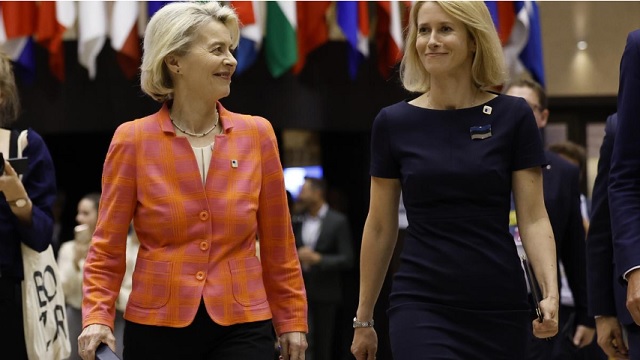
European Union leaders have renewed their commitment to strengthening the bloc’s Single Market during a high-level summit aimed at boosting economic growth, improving competitiveness, and supporting businesses across member states.
The Single Market, one of the EU’s most important achievements, allows goods, services, capital, and people to move freely across 27 countries. It has helped create opportunities for millions of citizens and businesses since its launch more than three decades ago. However, leaders say there is still work to do to remove remaining barriers and modernize the system for today’s economy.
At the recent summit, heads of state and government discussed practical steps to deepen integration and make the market more efficient. The focus was on reducing bureaucracy, supporting innovation, and ensuring that companies — especially small and medium-sized enterprises (SMEs) — can operate more easily across borders.
Removing Barriers to Growth
Despite the success of the Single Market, some regulatory and administrative obstacles still limit its full potential. Businesses operating in multiple EU countries often face different national rules, licensing systems, and reporting requirements. These differences can increase costs and slow down expansion.
EU leaders emphasized the need for better coordination and harmonized regulations to simplify cross-border operations. By aligning standards and improving enforcement of existing rules, the bloc hopes to create a more predictable business environment.
Reducing unnecessary red tape was a major talking point. Officials believe that cutting excessive administrative burdens will encourage entrepreneurship, attract investment, and improve Europe’s global competitiveness.
Boosting Innovation and Digital Integration
Another key theme of the summit was digital transformation. As global competition increases, EU leaders see innovation and technology as central to future growth.
Discussions included strengthening the Digital Single Market, improving cross-border digital services, and supporting emerging industries such as artificial intelligence, green technology, and advanced manufacturing.
Leaders also highlighted the importance of investing in research and development. By encouraging collaboration between universities, startups, and established companies, the EU aims to build a more dynamic and resilient economy.
Improving digital infrastructure across member states is also seen as essential. Reliable internet access, secure data systems, and modern communication networks can help businesses expand and connect with customers throughout Europe.
Supporting Small Businesses
Small and medium-sized enterprises form the backbone of the European economy. They account for a large share of employment and innovation across the region. Recognizing this, EU officials stressed the need to make the Single Market more accessible to smaller firms.
Many SMEs face challenges when trying to enter foreign markets due to complex regulations or limited resources. Leaders discussed simplifying compliance procedures and providing better guidance to help these businesses grow beyond their home countries.
Access to financing was also raised as a priority. By strengthening capital markets and encouraging private investment, the EU hopes to provide businesses with the funds needed to scale up and compete globally.
Strengthening Economic Resilience
Recent global events have exposed vulnerabilities in supply chains and energy markets. In response, EU leaders underlined the importance of building a more resilient and self-reliant economy.
Deepening the Single Market is viewed as a way to improve stability and reduce dependence on external partners. By strengthening internal trade and cooperation, member states can better withstand external shocks.
Energy cooperation, industrial policy coordination, and strategic investment were also part of the discussions. Leaders agreed that closer collaboration can help secure long-term economic stability.
Looking Ahead
The summit concluded with a shared understanding that the Single Market remains a powerful tool for economic progress. However, maintaining its success requires ongoing reform and adaptation.
EU officials are expected to propose concrete measures in the coming months, focusing on regulatory simplification, digital expansion, and stronger enforcement of existing rules.
While challenges remain, leaders expressed confidence that deeper integration will benefit citizens and businesses alike. By modernizing the Single Market and removing lingering barriers, the European Union aims to position itself as a competitive and forward-looking economic force in a rapidly changing world.
As discussions continue, the outcome of these efforts will play a key role in shaping Europe’s economic future.