The United States House Subcommittee on Africa will hold an open hearing on November 20, 2025, to investigate rising religious persecution in Nigeria and President Donald Trump’s redesignation of the country as a Country of Particular Concern (CPC).
The CPC status, if approved by the US Senate, could lead to sanctions on Nigerian officials accused of religious persecution and restrict certain forms of US assistance. It also signals global concern over Nigeria’s religious freedom situation.
The hearing, chaired by Rep. Chris Smith (R-NJ), will feature senior US State Department officials and Nigerian religious leaders. Panelists include Jonathan Pratt of the Bureau of African Affairs, Jacob McGee of the Bureau of Democracy, Human Rights and Labor, and religious figures such as Ms. Nina Shea and Bishop Wilfred Anagbe.
The session aims to review the scale of religious violence in Nigeria and consider policy options including sanctions, humanitarian support, and cooperation with Nigerian authorities.
On October 31, 2025, President Trump redesignated Nigeria as a CPC, citing widespread attacks on Christians by extremist groups. He warned of possible sanctions and even military action if the Nigerian government fails to stop the killings.
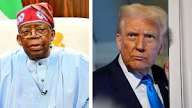
President Bola Tinubu rejected Trump’s claims, insisting Nigeria remains committed to religious freedom. “Nigeria stands firmly as a democracy governed by constitutional guarantees of religious liberty,” Tinubu said.
The debate comes amid persistent attacks by Islamist extremists and militant herdsmen targeting Christian communities. Bishop Anagbe, who will testify at the hearing, has repeatedly raised alarm over killings and displacement in Benue State.
US lawmakers remain divided. Rep. Riley Moore said Congress has already begun investigating the alleged persecution, insisting the situation is “horrific.” He claimed Christians are being killed at a ratio of five to one compared to Muslims.
However, Rep. Bill Huizenga played down the likelihood of US military intervention, saying Trump likely intends pressure rather than force, with economic sanctions seen as a more realistic tool.
Meanwhile, Pope Leo XIV expressed concern about attacks on Christians in Nigeria, Bangladesh, Sudan, Mozambique, and other regions, calling for global prayers and peaceful coexistence.
Within Nigeria, the Federal Government has continued peace efforts. Last week, President Tinubu sent an emissary, Dr Abiodun Essiet, to Plateau State to engage Christian and Fulani leaders in dialogue aimed at restoring harmony.
Related Posts