If you’ve ever heard politicians celebrate economic growth while your own cost of living keeps rising, you’ve probably wondered: How big is Nigeria’s economy really, and why doesn’t it always feel that way? That’s where Gross Domestic Product (GDP) comes in. GDP is one of the most important indicators economists use to measure the size and health of an economy. It influences government policy, investor confidence, employment opportunities, and even the value of the naira.
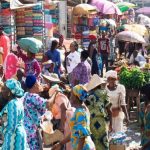
For Nigerians in Lagos, Abuja, Port Harcourt, Kano, Enugu, Ibadan, and every other part of the country, GDP affects everyday life in ways that aren’t always obvious. Whether you’re running a small business, working a salary job, farming, investing, or simply trying to keep up with rising food prices, understanding Nigeria’s GDP helps explain why the economy behaves the way it does.
This guide explains what Nigeria’s GDP means, how large the economy is today, which sectors contribute the most, why GDP keeps changing, and what the figures mean for ordinary Nigerians.
What Is GDP?
GDP stands for Gross Domestic Product. It measures the total monetary value of all goods and services produced within Nigeria during a specific period, usually one year or one quarter.
Think of GDP as Nigeria’s annual economic report card. Every bag of rice harvested in Kebbi, every fintech transaction processed in Lagos, every barrel of crude oil exported from the Niger Delta, every movie produced in Nollywood, and every professional service delivered across the country contributes to GDP.
When GDP increases, the economy is producing more goods and services. When GDP shrinks, businesses often struggle, unemployment may rise, and government revenue can decline.
How Big Is Nigeria’s Economy?
According to the National Bureau of Statistics (NBS), Nigeria remains one of Africa’s largest economies by GDP. The country’s economy has continued expanding following the COVID-19 recovery, although growth has been uneven due to inflation, exchange-rate reforms, fuel subsidy removal, and rising borrowing costs.
The International Monetary Fund (IMF) estimates Nigeria’s nominal GDP at roughly US$250–260 billion following the significant depreciation of the naira. Although Nigeria’s productive capacity remains large, the weaker exchange rate reduced the country’s dollar-denominated GDP compared with previous years.
Measured in local currency, Nigeria’s economy continues to expand every year. However, because international GDP comparisons are usually made in US dollars, fluctuations in the exchange rate significantly affect Nigeria’s ranking among African economies.
Indicator
Latest Estimate
Nominal GDP
Approximately US$250–260 billion
Population
Over 230 million people
GDP Growth
Around 3–4% annually in recent quarters
Largest Economic Hub
Lagos State
Primary Export
Crude Oil
Source: National Bureau of Statistics (NBS), International Monetary Fund (IMF), World Bank (latest available estimates).
Naira Exchange Rate Tracker
The exchange rate has a major impact on Nigeria’s GDP in US dollar terms. Track the latest naira movements here.
📊 Naira Exchange Rate Tracker
Live USD, GBP & EUR to NGN converter — no API key needed
Fetching live rate
NGN Equivalent
Why Does Nigeria’s GDP Change?
GDP is not fixed. It rises and falls depending on economic activity across different sectors.
1. Oil Prices
Although oil contributes a smaller share of GDP than it once did, it remains Nigeria’s biggest source of foreign exchange. When global crude oil prices increase and production improves, government revenue typically rises.
Conversely, pipeline vandalism, production disruptions, or falling international oil prices reduce export earnings and slow economic growth.
2. Exchange Rate Reforms
The Central Bank of Nigeria’s foreign exchange reforms have significantly affected the economy. A weaker naira makes exports more competitive but also increases the cost of imported goods, machinery, medicines, and industrial inputs.
Since international GDP rankings are measured in US dollars, naira depreciation reduces Nigeria’s GDP value when converted into dollars, even if domestic production remains stable.
3. Inflation
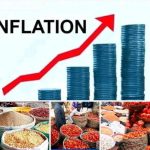
High inflation remains one of Nigeria’s biggest economic challenges. Food inflation, transportation costs, electricity expenses, and higher fuel prices reduce consumers’ purchasing power.
Businesses also spend more on production, which can slow investment and reduce economic expansion.
4. Agriculture
Agriculture continues to employ millions of Nigerians across states such as Kaduna, Benue, Niger, Kano, and Kebbi. Good harvests increase GDP, while flooding, insecurity, and climate-related challenges reduce agricultural output.
Which Sectors Contribute Most to Nigeria’s GDP?
One of the biggest misconceptions is that Nigeria’s economy depends entirely on oil. While oil dominates export earnings and government revenue, the country’s GDP is actually driven by a much broader range of industries.
Telecommunications companies, fintech startups, commercial banks, supermarkets, logistics firms, and entertainment businesses now contribute substantially to economic growth. Lagos remains Nigeria’s commercial capital, while Abuja drives public administration and professional services. Port Harcourt remains central to oil and gas activities, while Kano continues to be an important commercial and manufacturing centre in northern Nigeria.
Why GDP Doesn’t Always Reflect Living Standards
You may hear that Nigeria’s economy grew by 3% while your household budget feels tighter than ever. That’s because GDP measures production—not how wealth is shared.
For example, a strong performance by banks, telecom operators, or oil companies can increase GDP even when many households face higher food prices, electricity bills, transport fares, and rent.
This is why economists also examine inflation, unemployment, poverty levels, and GDP per capita when assessing how well Nigerians are actually doing financially.
Emmanuel Benson is a Nigerian journalist and digital media writer with a keen interest in politics, economy, and everyday life across Nigeria and Africa. Based in Lagos, he covers breaking news, policy developments, and the stories that shape how Nigerians live and work.